
Open 24/7 · Calls Answered Anytime Watertown (952) 847-3387
Full Time Heating and Cooling · Watertown, MN

Furnace Repair — Honest Diagnosis, No Sales Pressure

24/7 Emergency Service5.0 · 211 Local ReviewsMN License MB792165
Furnace Repair — Honest Diagnosis, No Sales Pressure
NEED HVAC SERVICE?Leave your number. We'll call within one business day.
No obligation. Your information stays private.

What Happens When You Call for Furnace Repair

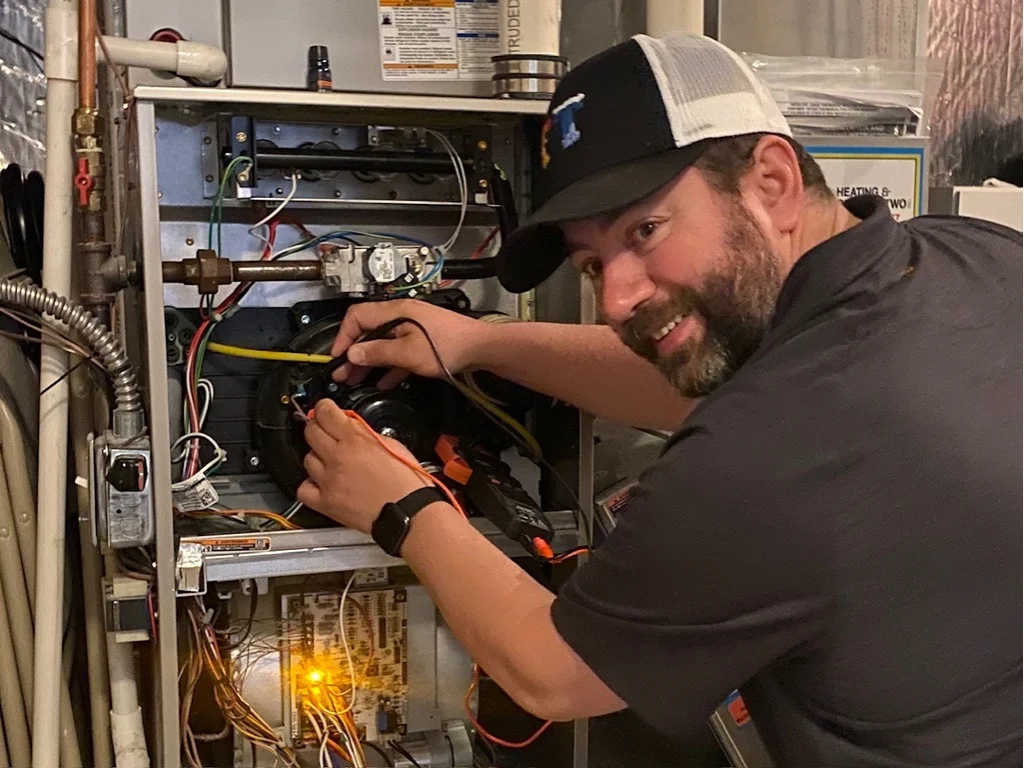
When you call or text (952) 847-3387, you'll receive a confirmation message with a 2-hour arrival window — not a vague "sometime this afternoon." When your technician is on the way, you'll get a text with their photo and live tracking so you know exactly when to expect them. On arrival, the technician runs a full diagnostic before recommending anything. You'll hear what's wrong, what it costs to fix, and whether repair makes sense given the age and condition of the system. No pressure. No upsell. Just a straight answer.

Common Furnace Problems We Repair

Most furnace failures trace back to a small set of components that wear out over time. A dirty or failed flame sensor is one of the most common — the furnace fires, then shuts off almost immediately. A cracked ignitor won't light the burner at all. Pressure switch failures usually mean the inducer motor isn't building the right draft. A bad control board can cause almost any symptom, which is why chasing parts without a proper diagnosis wastes money. We also handle gas valve issues, blower motor failures, limit switch trips, and heat exchanger inspections. If something's wrong, the diagnostic will find it. If it's something you can monitor rather than fix immediately, we'll tell you that too.

Signs Your Furnace Needs a Repair Call

Details below

No Heat at All

The furnace runs but blows cold air, or it doesn't start at all. Could be an ignitor, a gas valve, a pressure switch, or a control board. Don't guess — a diagnosis takes 20 minutes and tells you exactly what failed.
Short Cycling

The furnace kicks on, runs for a minute or two, then shuts off before the house reaches temperature. A dirty flame sensor is the usual suspect, but a tripped limit switch or a blocked flue can cause the same thing.

Unusual Sounds

Banging, rattling, or a high-pitched squeal during startup or operation. Banging on ignition often means delayed ignition from a dirty burner. Squealing usually points to a blower motor bearing going out.

Yellow or Orange Flame

A furnace burner should produce a steady blue flame. Yellow or orange means incomplete combustion — often a dirty burner or a sign of a more serious problem. Don't run the system; call for a diagnostic.

Rising Utility Bills with No Change in Usage

A furnace working harder than it should to keep up will show up on your gas bill before it fails completely. Annual maintenance catches this early — but if you're already seeing it, a repair call now is cheaper than a no-heat call in February.

The Furnace Won't Stay Lit

If the burner lights and then goes out within seconds, the flame sensor is almost always the cause. It's a quick, inexpensive repair — but running the furnace repeatedly while it fails can shorten the life of other components.

Repair First. Replacement Only When It's the Right Call.

Plenty of HVAC companies lead with replacement. We don't. If your furnace is repairable, we'll repair it. There are situations where replacement is the honest recommendation — a cracked heat exchanger is a safety issue, not a repair candidate, and a 25-year-old furnace with a failed control board is probably not worth the part cost. But those are the exceptions, not the default answer. Our technicians aren't on commission, which means they have no reason to push you toward a new system when a $200 repair will get you through another five winters. If you've already been told you need a replacement and you're not sure, we offer free HVAC second opinions — bring us the other company's diagnosis and we'll tell you what we find.

Furnace Maintenance Prevents Most Emergency Calls

Most furnace failures aren't random. A dirty flame sensor, a clogged filter, a worn ignitor — these develop over months, not overnight. A seasonal tune-up catches them before they strand you without heat. The HVAC maintenance program at Full Time covers a full furnace inspection, cleaning, and a check of all safety controls. It's a straightforward way to extend the life of a system you've already paid for. If we find something during maintenance that needs attention, we'll tell you before it becomes an emergency call.

Get a Straight Diagnosis on Your Furnace

Don't wait for a complete breakdown before calling. If something's off with your furnace, (952) 847-3387 is answered 24/7. We'll diagnose the problem, tell you what it costs to fix, and let you make the call from there.

Or send us your info

By submitting this form you agree that we may contact you about your request.

FAQ Common questions

Frequently Asked Questions

Answers below
What is a furnace and how does it work? +
A furnace burns natural gas (or propane, or uses electricity) to generate heat, then a blower pushes that heat through your ductwork. The sequence goes: thermostat calls for heat, inducer motor starts, ignitor glows, gas valve opens, burner lights, heat exchanger warms up, blower turns on. Every step in that sequence has a component that can fail, which is why a proper diagnostic traces the sequence rather than guessing at the symptom.
Which furnace brand is the most reliable? +
Reliability across major brands is closer than marketing suggests. What matters more is correct sizing, proper installation, and annual maintenance. An oversized furnace from a premium brand short-cycles itself to death. A mid-tier furnace installed correctly and maintained annually will outlast it. Full Time installs AirQuest equipment — dependable performance and strong warranty coverage without paying extra for brand recognition.
Is it better to repair a furnace or replace it? +
The honest calculation: if the repair cost is less than one-third of what a replacement would run, and the system is under 15 years old, repair almost always makes sense. A cracked heat exchanger is a hard stop — that's a safety issue and replacement is the right call. A failed ignitor on a 10-year-old furnace? Repair it. We'll walk you through the math on your specific system.
What is better, a heat pump or a furnace in Minnesota? +
In Minnesota, a furnace is still the more reliable primary heat source in deep winter. Cold-climate heat pumps can operate efficiently down to around -13F, but they're typically paired with a furnace as a backup in a dual-fuel setup. A standalone heat pump without a gas backup is a risk when temperatures drop below -10F for extended periods. Full Time can walk you through what makes sense for your home's current setup.
How long does a typical furnace repair take? +
Most repairs are completed in a single visit. A flame sensor replacement, ignitor swap, or pressure switch fix usually takes under an hour once diagnosed. A control board or inducer motor replacement can take longer, and some parts may need to be ordered if they're not on the truck. You'll get an honest timeframe after the diagnostic, not a best-case estimate designed to get you to schedule.
How much should a new furnace cost? +
A new gas furnace installation in the Twin Cities metro is priced by the efficiency rating (80% vs. 96% AFUE), the size of the home, whether ductwork modifications are needed, and the brand. High-efficiency variable-speed systems cost the most. Honest answer: if repair is a reasonable option for your system, a repair is almost always cheaper. We'll tell you which call makes financial sense.

Our promise

If we can repair it, we will.

No unnecessary replacements.You get the fix, not the invoice we would rather write.

Keep Reading