Open 24/7 · Calls Answered Anytime Watertown (952) 847-3387
Full Time Heating and Cooling · Watertown, MN

Know When Your Air Filter Needs Replacing

24/7 Emergency Service5.0 · 211 Local ReviewsMN License MB792165
Know When Your Air Filter Needs Replacing
NEED HVAC SERVICE?Leave your number. We'll call within one business day.
No obligation. Your information stays private.

Signs Your Air Filter Needs Replacing Right Now

Details below
You don't need a calendar reminder to know when a filter's done its job. Your house tells you.

Visible Dust Buildup

Pull the filter out and hold it up to light. If it's grey or dark brown and you can't see light through it, it's past due. A clogged filter forces your system to work harder to pull air through, which stresses the blower motor and raises your energy bill.

Reduced Airflow at Vents

Weak airflow from registers is one of the most consistent indicators of a clogged filter. The system is still running, but it's suffocating. This also causes uneven heating and cooling throughout the home.

More Dust on Surfaces

If you're dusting more often than you used to, your filter isn't capturing what it should. Bypassed particulates recirculate and settle on furniture, shelves, and floors. A filter swap often makes a noticeable difference within a few days.

System Short-Cycling

Furnaces and air conditioners that turn on and off in short bursts are sometimes reacting to restricted airflow caused by a clogged filter. The system overheats or hits a pressure limit and shuts down prematurely. If furnace repair calls are piling up, check the filter first.

Allergy or Asthma Flare-Ups

A saturated filter stops trapping pollen, pet dander, and dust mites. If household members with respiratory sensitivities are having more symptoms than usual, indoor air quality has likely dropped. That may point to a filtration upgrade, not just a filter change.

Musty or Stale Air Odor

Filters that have trapped moisture or biological growth can emit an odor when air passes through them. If the smell is concentrated near registers, the filter or the area just downstream of it needs attention.

What Whole-Home Air Filtration Actually Does

A standard 1-inch filter has one job: protect the blower and heat exchanger from large debris. It's not designed to meaningfully improve the air you breathe. Whole-home air filtration systems work differently. A media filter, for example, typically 4 to 5 inches thick, captures particles down to 0.3 microns without restricting airflow the way a dense 1-inch HEPA-style filter would in a residential system. Electronic air cleaners use an electrical charge to attract and trap fine particles. Some systems combine filtration with UV purification to address biological contaminants. None of these are one-size-fits-all solutions. Installing the wrong filtration product on a system that can't handle the added static pressure causes more problems than it solves. That's a mistake we won't make. We assess your existing equipment before recommending anything.

How Full Time Approaches Filtration Recommendations

The way most HVAC companies sell air filtration is backwards. They lead with the product. We lead with the diagnosis. Before we recommend any filtration upgrade, we look at your existing equipment, measure static pressure, assess your ductwork configuration, and ask about your household. Homes with pets, young children, or anyone with respiratory conditions have different filtration needs than a two-person household with no allergies. We're also part of the HVAC maintenance program that includes filter checks on a schedule that actually makes sense for your specific system. Jason reviews every installation personally before it's considered complete, which means you're not left guessing whether the new equipment was set up correctly. The same accountability applies to a filtration upgrade as it does to a full furnace replacement.

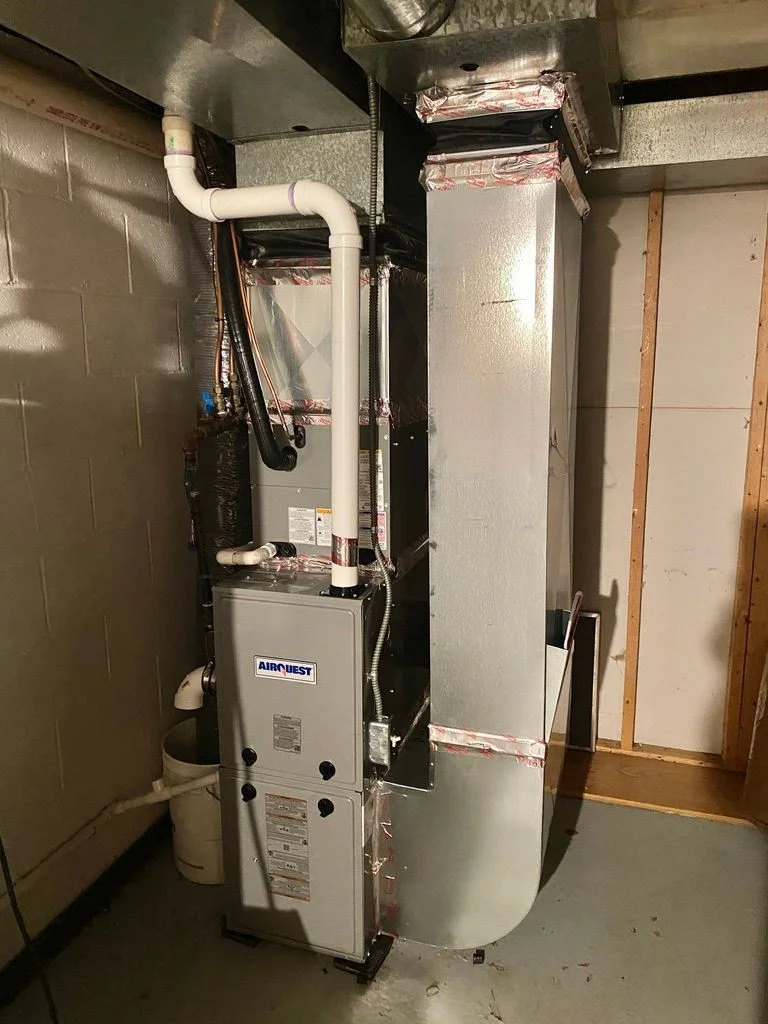
What Drives Filtration System Costs

The range for air filtration solutions is genuinely wide. A basic media filter cabinet and filter might run a few hundred dollars installed. A full electronic air cleaner system with UV integration on a complex ductwork layout is a different scope entirely. What drives the number up or down: the type of filtration technology you choose, how accessible your existing ductwork is, whether modifications to the filter housing are needed, and whether you're combining filtration with a humidifier or air purification system at the same time. We don't bundle services together to inflate the ticket. If you only need a filter upgrade, that's what we'll recommend. Every job is different. Contact Full Time Heating and Cooling for an accurate estimate.

Filtration and Your HVAC System's Long-Term Health

A neglected filter doesn't just affect air quality. It affects the lifespan of every major component downstream. Restricted airflow causes heat buildup in the heat exchanger, which leads to cracks over time. It strains the blower motor. It causes the evaporator coil on your AC to ice over. Honestly, a significant portion of the emergency HVAC service calls we respond to in winter trace back to systems that were running on a clogged filter for months. Changing a filter is a five-minute task. Replacing a heat exchanger is not. If you're not sure what filter your system takes, what MERV rating is appropriate, or how often yours should be swapped given your household conditions, call us and we'll tell you straight. We serve homes throughout the Twin Cities Metro and surrounding communities. Check the areas we serve to confirm your location.

Ready to Improve Your Home's Air Quality?

Whether your filter's overdue or you're looking at a full filtration upgrade, Full Time gives you a straight diagnosis and a recommendation based on what your home actually needs. Fully insured. No commission pressure.

Or send us your info

By submitting this form you agree that we may contact you about your request.

FAQ Common questions

Frequently Asked Questions

Answers below
What does air filtration do? +
Air filtration removes particulates from the air moving through your HVAC system. A standard 1-inch filter captures large debris like dust and lint to protect equipment. Higher-grade filtration, such as media filters rated MERV 11 to 13, captures fine particles including pollen, pet dander, mold spores, and some bacteria. What a filter does for your indoor air quality depends entirely on what type it is and how well it's matched to your system's airflow capacity.
Do air purifiers actually purify the air? +
Some do. The honest answer is that results vary by technology. Mechanical filters capture particles physically. Electronic air cleaners use ionization or electrostatic collection to trap finer particles. UV systems address biological contaminants like mold and bacteria but don't remove particulates. Products that only produce ions without a collection mechanism have mixed evidence behind them. We'll tell you what the research actually supports before recommending anything.
What is the best way to filter air in my house? +
For most Minnesota homes with a forced-air system, a 4-inch media filter cabinet installed at the air handler is the best balance of filtration effectiveness and system compatibility. It captures particles down to 0.3 microns and doesn't create the static pressure problems that high-MERV 1-inch filters cause in residential ductwork. If your home doesn't have existing ductwork, a ductless mini split installation with built-in multi-stage filtration is worth considering.
What are signs you need an air purifier? +
Signs that your current filtration isn't enough: persistent allergy or asthma symptoms that don't track with outdoor conditions, musty odors from registers, visible mold near vents or the air handler, excessive dust settling quickly after cleaning, or pets in the home combined with a basic 1-inch filter. A purifier addresses biological contaminants specifically, which filtration alone doesn't always handle. We'll assess which solution fits your situation.
How often should I replace the air filter in my HVAC system? +
It depends on the filter type and your household. A standard 1-inch filter in a home with pets and occupants typically needs replacement every 30 to 45 days. A 4-inch media filter in the same home might last 6 to 12 months. Running your system with the wrong replacement interval, either too long or changing a clean filter unnecessarily, costs you either air quality or money. We'll tell you the right schedule for your specific setup when we service your system.
Can a clogged air filter damage my furnace or AC? +
Yes. A clogged filter restricts airflow across the heat exchanger and evaporator coil. In a furnace, this causes overheating and can crack the heat exchanger over time. A cracked heat exchanger can allow combustion gases to enter living spaces, which is a safety issue, not just a comfort issue. On the cooling side, restricted airflow causes the evaporator coil to freeze. Either outcome leads to a service call that's entirely avoidable. Check your filter before calling us if your system stops working.
What MERV rating should I use for my home? +
MERV 8 to 11 covers most residential needs without restricting airflow on standard systems. MERV 13 captures finer particles but increases static pressure significantly in 1-inch filter slots, which stresses the blower. If you want MERV 13 performance, a 4-inch media filter cabinet installed at the air handler handles it correctly. We do not recommend high-MERV 1-inch filters as a drop-in upgrade without checking whether your system's blower can handle the added resistance.

Our promise

If we can repair it, we will.

No unnecessary replacements.You get the fix, not the invoice we would rather write.

Keep Reading