
Full Time Heating and Cooling · Watertown, MN
Boiler Service and Installation From Technicians Who Diagnose First
24/7 Emergency Service5.0 · 211 Local ReviewsMN License MB792165
NEED HVAC SERVICE?Leave your number. We'll call within one business day.
No obligation. Your information stays private.
boiler work — professional service in Watertown, MN
What We Check During a Boiler Service Call
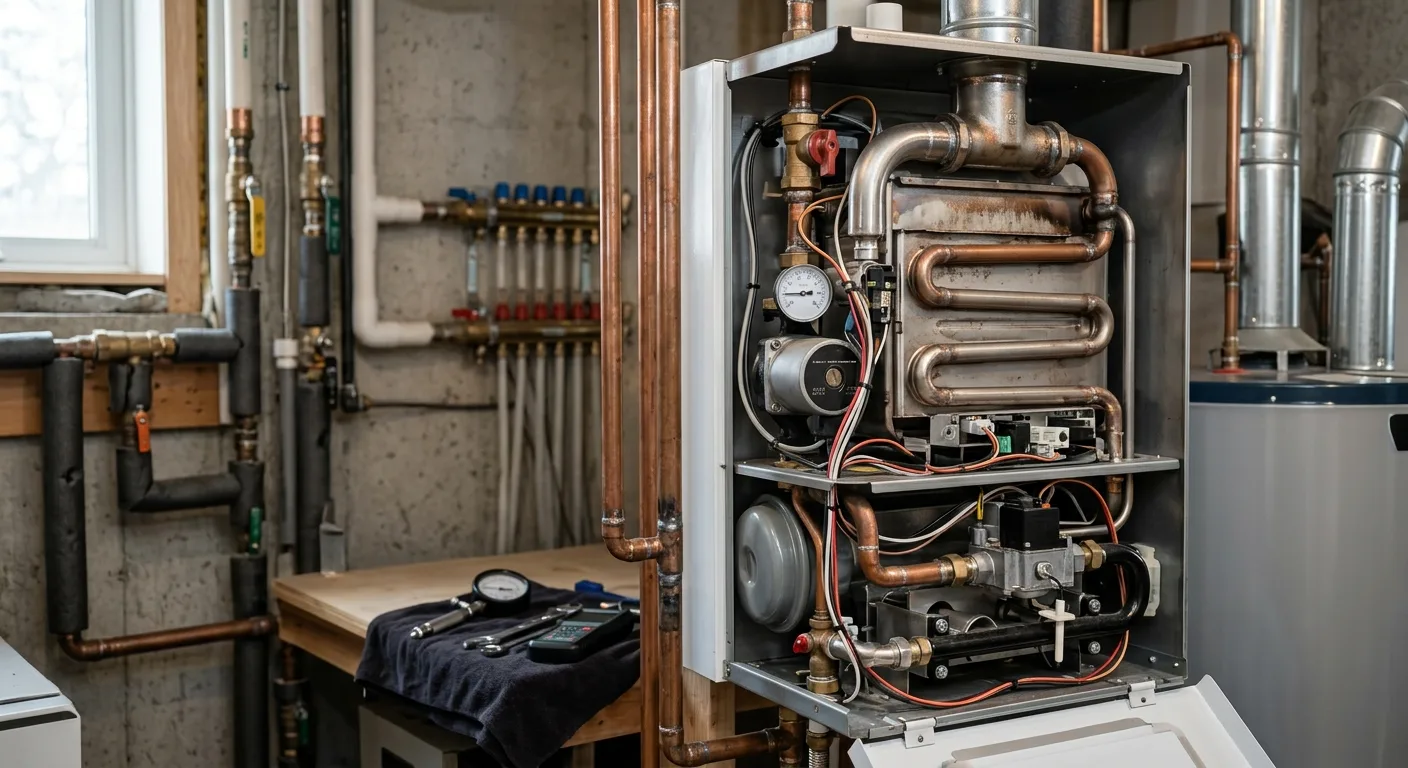
When we arrive for a boiler service, we're not doing a five-minute visual and calling it done. We check the heat exchanger for cracks or corrosion, test the pressure relief valve, inspect the circulator pump and zone valves, verify burner ignition and flame quality, and confirm that controls and thermostats are communicating correctly. If you have a condensing boiler, we also check the flue and condensate drain — those get overlooked more often than they should. The goal is to leave knowing exactly what state your system is in, not guessing.
boiler work — professional service in Watertown, MN
Repair First. Replacement Only When It Makes Sense.
Boilers are built to last. A well-maintained cast iron boiler can run 25 to 30 years, and a lot of what goes wrong along the way is repairable: zone valves, circulator pumps, pressure vessels, ignition components, thermocouples. We'll always tell you if a repair is the right call. If we find a cracked heat exchanger or corrosion that's compromised the entire system, we'll tell you that too — plainly, without pressure. Our techs aren't on commission, so there's no financial incentive to push you toward a new boiler when yours can be fixed. We're also happy to link you to our HVAC maintenance program if you want to catch problems before they become emergencies.
boiler work — professional service in Watertown, MN
Condensing vs. Non-Condensing Boilers — What the Difference Actually Means for Your Home
This question comes up a lot, and it matters when you're looking at a new boiler installation. Condensing boilers extract heat from exhaust gases that a standard boiler vents away — which is why they hit efficiency ratings of 90% AFUE or higher. That efficiency comes with a real trade-off: they require a condensate drain and a slightly different venting setup, which affects installation cost. Non-condensing boilers are simpler mechanically and often less expensive upfront, but you'll pay more in fuel costs over time. Neither option is automatically right. The correct answer depends on your existing piping, your home's heat load, and your fuel costs. We'll walk you through both options before anything gets ordered.
What to Expect When You Call Us for Boiler Work
Details below
Here's how a typical service call or installation goes with Full Time Heating and Cooling.
We give you a 2-hour arrival window
We diagnose before we quote
Owner reviews every installation
boiler work — professional service in Watertown, MN
Boiler Installation — How We Approach It
Every boiler installation starts with a proper heat load calculation. Slapping in a boiler that's too large is one of the most common mistakes in this trade — oversized boilers short-cycle, which accelerates wear and drives up fuel costs. We size the replacement correctly, account for your existing zone piping and zone systems, and make sure the new unit is matched to how your home is actually built. If you're going from a non-condensing to a condensing boiler, we'll handle the venting and condensate drain changes. We don't hand off pieces of the job to whoever is available — installations run with the same experienced crew on every job.
boiler work — professional service in Watertown, MN
Gas Fireplace and Broader Heating Services
Boilers aren't the only heating system we work on. If you've got a gas fireplace that needs attention before winter, our team handles gas fireplace repair and cleaning as well. And if you're comparing hydronic heat against a forced-air furnace repair or replacement, we can help you think through both — without pushing you toward the option that costs more. We also offer air filtration and dehumidifier services for homes that need help with air quality alongside their heating.
boiler work — professional service in Watertown, MN
Service Areas
We serve the Twin Cities west metro, including Minnetonka, Chaska, Victoria, Eden Prairie, Waverly, Shorewood, and surrounding communities. See the full areas we serve page for more detail.
Ready to Get Your Boiler Diagnosed or Replaced?
Whether your boiler stopped heating, is making noise it shouldn't, or you're pricing out a new installation, call us and get a straight answer. No pressure, no commission-based upsells — just an honest look at what your system needs.
Or send us your info
FAQ Common questions
Frequently Asked Questions
Answers below
What is a boiler service? +
A boiler service is a full inspection and performance check of your hydronic heating system. A technician examines the heat exchanger, burner assembly, circulator pump, zone valves, pressure relief valve, and all controls. They check for leaks, test combustion efficiency, verify that the system is heating to set temperatures, and flag any components that are failing or close to it. It's the same concept as a furnace tune-up — catch small problems before they become cold-night emergencies.
What is the average cost to clean a boiler? +
A standard boiler cleaning and service call in the Twin Cities metro typically runs $100 to $250 depending on the boiler type, age, and how long it's been since the last service. Cast iron boilers with older burner assemblies may take longer to clean thoroughly. If the technician finds parts that need replacing during the service — an expansion tank, pressure relief valve, or circulator — that's quoted separately before any additional work is done. Every job is different — contact Full Time Heating and Cooling for an accurate estimate.
Do plumbers handle boilers? +
Some plumbers do work on the water-side components of boiler systems — the piping, zone valves, and supply lines. HVAC contractors handle the combustion equipment: the burner, heat exchanger, controls, and gas supply. For a complete boiler service or installation, you want someone licensed for both the mechanical and gas work. Full Time Heating and Cooling handles the full scope — diagnosis, repair, and installation — and we're fully insured on every job.
How often do boilers need to be serviced? +
Once a year is the standard recommendation for a gas boiler, ideally in early fall before heating season. Annual service keeps combustion efficiency where it should be, catches worn components before they fail mid-winter, and maintains most manufacturer warranties. Boilers that go multiple years without service tend to accumulate sludge in the system and develop pressure issues that a single service call can't always fully reverse. Consistent annual maintenance is a lot cheaper than an emergency replacement.
How do I know if my boiler needs repair or full replacement? +
The honest answer is: you need a technician to look at it. Age matters — a boiler over 20 years old with a cracked heat exchanger is usually not worth repairing. But a 12-year-old boiler with a failed circulator pump or a bad zone valve is almost always worth fixing. We diagnose first and give you a clear recommendation either way. Our technicians aren't on commission, so they have no incentive to recommend replacement when repair makes more sense.
What is the difference between a condensing and non-condensing boiler, and does it affect installation cost? +
A condensing boiler extracts heat from exhaust gases before they're vented, which pushes efficiency above 90% AFUE. A non-condensing boiler vents those gases without extracting that last bit of heat, which means lower efficiency but simpler venting. Condensing boilers require a condensate drain and typically PVC flue pipe rather than metal. That affects installation cost and complexity. Which one is right for your home depends on your existing setup and fuel costs over time — we'll walk you through both options before anything gets ordered.
Our promise
If we can repair it, we will.
No unnecessary replacements.You get the fix, not the invoice we would rather write.
Keep Reading
More Services
- Air ExchangerAir exchanger repair, cleaning, and installation from fully insured HVAC techs. No commission pressure. Call Full Time Heating and Cooling anytime.
- Air FiltrationDirty filter or stale indoor air? Full Time diagnoses your filtration setup and recommends only what your home actually needs. Fully insured. Call anytime.
- Air PurificationWhole-home air purification installed by Full Time Heating and Cooling. UV-C lights, media filters, and iWave-R systems that actually clean the air your family breathes. Call (952) 847-3387.
- Commercial InstallationCommercial HVAC installation for small businesses and facilities in the Twin Cities West Metro. Honest diagnostics, no commission techs. Call (952) 847-3387.
- Commercial MaintenanceCommercial heating and air conditioning repair, maintenance, and installation for MN businesses. Repair-first approach. 24/7 emergency service. Call (952) 847-3387.
- Commercial RepairCommercial HVAC repair for small businesses across the West Metro. Honest diagnostics, repair-first approach, fully insured. Call (952) 847-3387 anytime.