
Full Time Heating and Cooling · Watertown, MN
Emergency HVAC Repair, Available 24 Hours a Day
24/7 Emergency Service5.0 · 211 Local ReviewsMN License MB792165
NEED HVAC SERVICE?Leave your number. We'll call within one business day.
No obligation. Your information stays private.
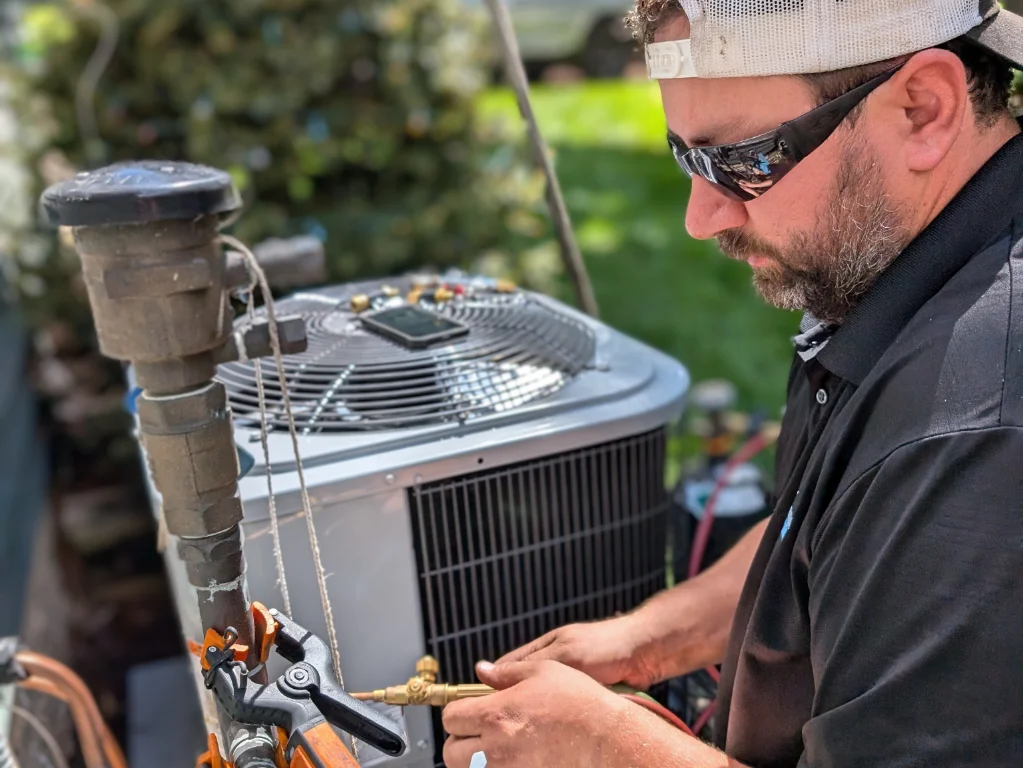
emergency work — professional service in Watertown, MN
What Happens When You Call Us at 2 AM
We'll ask you a few quick questions: what the system is doing, what it's not doing, and whether there are any error codes on the thermostat or control board. That conversation usually takes three minutes and helps us show up with the right parts. We send you a confirmation, and when the technician is on the way, you get a text with their photo and live tracking. No guessing whether someone is actually coming. We give you a two-hour arrival window, and we stick to it. For true emergencies, including no-heat situations during cold weather, we prioritize response as fast as conditions allow.
Signs Your HVAC System Needs Emergency Attention
Details below
Not every HVAC problem is an emergency, but some are. Here's what warrants a call right now rather than waiting until Monday:
Gas Smell Near the Furnace
System Runs but Produces No Heat or Cooling
Burning Smell or Visible Smoke
Frozen Evaporator Coil or Outdoor Unit Ice
Carbon Monoxide Alarm with HVAC Running
emergency work — professional service in Watertown, MN
How We Handle Emergency Diagnostics
When we arrive, we don't start the conversation by asking whether you've thought about a new system. We start with the equipment. A proper diagnostic means checking voltage at the board, confirming ignition sequence, testing the pressure switches, reading the fault codes, and inspecting the heat exchanger. It takes longer than a quick look-and-guess, but it's the only way to find the actual problem instead of throwing parts at it. We explain what we found in plain language before anything is approved. If the repair makes sense economically and gets you a reliable fix, that's what we recommend. If the system is genuinely at the end of its useful life, we'll tell you that too, and we'll show you why. Check out our why choose us page for more on how we approach every service call.
emergency work — professional service in Watertown, MN
What Protects You After an Emergency Repair
Fully insured means that if something goes wrong on our end during the repair, it's covered. No exceptions. For emergency calls involving equipment replacement, Full Time is an AirQuest Elite Dealer, which means qualifying installations include up to 10 years of parts coverage with registration, plus two additional years of No Hassle Replacement coverage beyond what the standard warranty provides. That's real protection, not a handshake promise. Enroll in our HVAC maintenance program after your emergency repair and we can help make sure the next failure doesn't become an emergency.
What Our Emergency Repair Process Looks Like
Details below
A structured process means faster resolution and fewer callbacks. Here's how a typical emergency call runs from start to finish:
1. Call or Text Anytime
2. Dispatch Confirmation
3. On-the-Way Notification
4. Full System Diagnostic
5. Plain-Language Explanation
6. Repair and Verify
Quick Reference: Common Emergency HVAC Causes
Homeowners often ask what causes emergency HVAC failures. Here are the most common causes we see on emergency calls across the Twin Cities metro:
Schedule an Emergency Service Call
Call or text (952) 847-3387 any time. We answer 24/7, including weekends and holidays. Fully insured. Repair-first diagnostics. No commission-based sales pressure.
Or send us your info
FAQ Common questions
Frequently Asked Questions
Answers below
What should I do while waiting for an emergency HVAC technician to arrive? +
For a no-heat situation, close off rooms you're not using to concentrate warmth and check that your thermostat is set to heat mode with the fan on auto. Don't try to bypass safety switches. If you smell gas, leave the house and call your utility before calling us. For a no-cooling situation, close blinds on sun-facing windows and avoid running heat-producing appliances. Don't run the AC if the outdoor unit is iced over.
How fast can you respond to an emergency HVAC call? +
Response time depends on how many calls are ahead of yours and how far you are from our service area in the Twin Cities west metro. We give every emergency caller a two-hour arrival window. For no-heat emergencies during extreme cold weather, we prioritize response. We won't give you a vague 'sometime today' answer. You'll know when we're coming before we hang up.
Why does my furnace keep tripping off during cold snaps specifically? +
High-efficiency furnaces have a secondary heat exchanger that extracts additional heat from flue gases. In very cold weather, the condensate that exchanger produces can freeze in the drain line or the PVC flue pipe if it exits on the north or shaded side of the home. When the drain backs up, the float switch shuts the furnace off. It's a common winter pattern and usually a straightforward fix, though the underlying drain routing sometimes needs to be corrected to prevent recurrence.
Will an emergency HVAC call cost significantly more than a regular service call? +
After-hours and weekend emergency calls typically carry a higher service fee than standard daytime appointments. We're transparent about that before we dispatch. What we won't do is use emergency pricing as cover to inflate the repair itself. The part costs what it costs. The labor is what it is. You'll know the full estimate before work starts, and you're not obligated to proceed. We'd rather you make an informed decision than feel cornered.
Can a dirty air filter actually cause an emergency furnace failure? +
Yes, and it does more often than people expect. A heavily restricted filter forces the blower to work harder while reducing actual airflow across the heat exchanger. The heat exchanger overheats, the high-limit switch trips, and the furnace shuts off. If the limit switch fails from repeated tripping, you're looking at a repair that could have been avoided with a $10 filter change. We check filter condition on every call, emergency or otherwise.
What does HVAC stand for, and what systems are covered under emergency service? +
HVAC stands for Heating, Ventilation, and Air Conditioning. Our emergency service covers gas furnaces, central air conditioners, heat pumps, and the thermostats and controls that connect them. We also handle urgent gas fireplace services when a fireplace used for supplemental heat stops working. Boilers, ductless mini splits, and indoor air quality equipment are also within scope. If it moves air or controls temperature in your home, we can diagnose it.
Our promise
If we can repair it, we will.
No unnecessary replacements.You get the fix, not the invoice we would rather write.
Keep Reading
More Services
- Air Conditioner RepairAC not cooling? We diagnose it first — no pressure to replace. Fully insured, 24/7 emergency service. Call Full Time Heating and Cooling for an honest repair estimate.
- Air ExchangerAir exchanger repair, cleaning, and installation from fully insured HVAC techs. No commission pressure. Call Full Time Heating and Cooling anytime.
- Air FiltrationDirty filter or stale indoor air? Full Time diagnoses your filtration setup and recommends only what your home actually needs. Fully insured. Call anytime.
- Air PurificationWhole-home air purification installed by Full Time Heating and Cooling. UV-C lights, media filters, and iWave-R systems that actually clean the air your family breathes. Call (952) 847-3387.
- Boiler ServicesBoiler not heating right? Full Time Heating diagnoses the real problem first. Repair or installation — we're fully insured and available 24/7. Call now.
- Commercial InstallationCommercial HVAC installation for small businesses and facilities in the Twin Cities West Metro. Honest diagnostics, no commission techs. Call (952) 847-3387.