
Open 24/7 · Calls Answered Anytime Watertown (952) 847-3387
Full Time Heating and Cooling · Watertown, MN

Emergency Heating Repair, Available Around the Clock

24/7 Emergency Service5.0 · 211 Local ReviewsMN License MB792165
Emergency Heating Repair, Available Around the Clock
NEED HVAC SERVICE?Leave your number. We'll call within one business day.
No obligation. Your information stays private.

What Counts as a Heating Emergency

Details below
Some situations need a call right now. Others can wait until morning. Here's how to tell the difference.

No Heat at All

Temperatures inside your home are dropping and your furnace isn't running. In a Minnesota winter, this becomes a safety issue fast -- especially for households with young children, elderly family members, or pets.
Gas Smell or Burning Odor

A sulfur smell near your furnace or gas lines means potential gas leakage. Leave the house, don't flip any switches, and call your gas utility first, then us. A burnt or electrical smell from your furnace can indicate a failing component that may cause a shutdown or fire risk.

Carbon Monoxide Alarm Triggered

CO detectors go off for a reason. A cracked heat exchanger is the most common source of carbon monoxide from a furnace. Get everyone out and call immediately. We inspect heat exchangers on every emergency call.

Furnace Cycling On and Off

Short cycling can leave your home barely warm while running up your gas bill. It's usually a dirty flame sensor, a blocked flue, or a failing pressure switch -- all diagnosable and repairable on a single visit.

System Won't Ignite

If your furnace tries to start and fails, or you hear clicking with no ignition, you may have a failed ignitor, a gas valve issue, or a safety lockout. Don't reset it more than twice -- repeated failed ignition attempts can indicate something that needs a technician.

Frozen Pipes Risk

If your home has dropped below 50 degrees and heat isn't coming, pipe freeze becomes a real secondary risk. Call now and run a trickle from your faucets while you wait.

What Happens When We Arrive

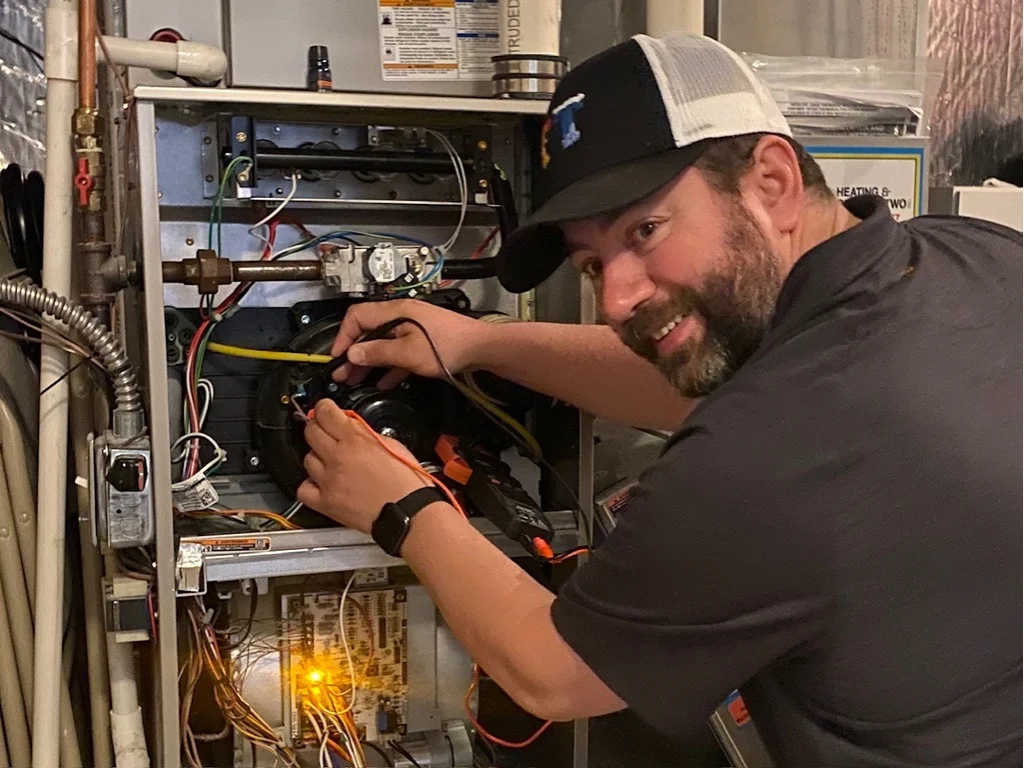
We don't show up and immediately walk you toward a new system. That's not how we work. The technician starts with a full diagnostic -- pulling error codes, checking gas pressure, testing electrical components, and inspecting the heat exchanger visually. You get a straight answer on what failed and why before any repair happens. If a part is needed that we don't carry on the truck, we'll tell you the timeline. If the system can be repaired safely and economically, we repair it. If it genuinely can't be, we'll explain why in plain terms -- not HVAC jargon. Our technicians aren't paid on commission, so there's no incentive to recommend anything you don't need. That's the whole model. Before we leave, you'll know what we found, what we did, and what to watch for going forward. You can also check out our reviews to hear how that plays out in practice.

Repair or Replace -- And When It Actually Applies

Repair vs. replacement gets reduced to rules of thumb constantly, and they get misused just as often. A 15-year-old furnace with a $200 ignitor replacement doesn't need to be replaced. A 12-year-old furnace with a cracked heat exchanger is a different conversation. The honest answer is that repair vs. replacement depends on the specific component that failed, the age and condition of the rest of the system, and what repairs have already been done. We'll give you the real breakdown. And if replacement does make sense, we'll show you furnace replacement options with warranty coverage that actually holds up -- including extended coverage available through our AirQuest Elite Dealer status.

Why Heating Type Matters for Emergency Repairs

Not all heating emergencies are the same, and the fix depends on what kind of system you have. Gas furnaces fail differently than heat pumps or boilers. A forced-air furnace with a failed inducer motor needs a different part and a different repair process than a heat pump in auxiliary lockout mode. We service gas furnaces, heat pumps, boilers, and ductless mini split systems across the area. When you call, tell us your system type if you know it -- it helps us confirm we have the right parts staged before we arrive.

Preventing the Next Emergency

Most heating emergencies have a warning sign that showed up weeks earlier -- a furnace that was short-cycling, a filter that hadn't been changed in a year, a flame sensor coated with residue. Annual HVAC tune-ups catch those issues before they become a 2 a.m. call. We'd rather see your system in the fall when it's running fine than at midnight when it's not. If your system checks out clean during a tune-up, we'll tell you that too. No manufactured urgency.

Call or Text Anytime -- We Answer 24/7

Your heat is out. We're ready. Call (952) 847-3387 -- day, night, weekends, and holidays. Full Time Heating and Cooling serves the Twin Cities West Metro. Fully insured. Repair-first. No commission-based upsells.

Or send us your info

By submitting this form you agree that we may contact you about your request.

FAQ Common questions

Frequently Asked Questions

Answers below
What should I do if I smell gas near my furnace? +
Don't touch any switches, including light switches. Don't use your phone inside the house. Get everyone out, leave the door open, and call your gas utility from outside. Once the utility has cleared the gas situation, call us at (952) 847-3387 to inspect the furnace. Gas leakage near a furnace can involve a faulty gas valve, a cracked fitting, or a failed flex connector -- all of which need a technician, not a reset.
Can a furnace cause carbon monoxide even if it's running? +
Yes. A cracked heat exchanger is the most common cause of carbon monoxide from a furnace that appears to be operating normally. Combustion gases that should vent outside can leak into your airstream through a crack you can't see without pulling the system apart. If your CO detector triggers, treat it as a real emergency. We inspect heat exchangers on every heating call and won't clear a system we're not confident in.
What does a burnt smell from a furnace usually mean? +
A burnt dust smell at the start of heating season is usually just dust burning off the heat exchanger after months of sitting idle -- it clears in 15 to 30 minutes. A persistent electrical burning smell, a smell like melting plastic, or a metallic odor that doesn't go away usually points to a failing blower motor, a cracked heat exchanger, or an overheating component. Don't ignore the second type. Call and describe what you're smelling -- it helps us prepare.
What is the cheapest way to heat a house if my furnace fails tonight? +
Electric space heaters are the safest short-term option while you wait for a repair. Use one per room, keep them away from flammable materials, and don't run extension cords under rugs. Don't use gas ovens or unvented propane heaters indoors -- carbon monoxide risk is real. The cheapest long-term move is getting the furnace fixed tonight so you're not running electric heat all week. That's why 24/7 emergency repair exists.
What type of heating system is best for a house in Minnesota? +
For most homes in this climate, a high-efficiency gas furnace in the 96% AFUE range is the most practical choice -- reliable down to extreme cold, lower operating cost than electric resistance heat, and a well-understood repair ecosystem. Heat pumps are improving at cold-climate performance and make sense in some situations, particularly when paired with a gas backup. The right answer depends on your home's existing infrastructure and your fuel cost reality. We'll give you a straight comparison, not a pitch for the most expensive option.

Our promise

If we can repair it, we will.

No unnecessary replacements.You get the fix, not the invoice we would rather write.

Keep Reading