
Furnace Not Keeping Up in a Minnesota Cold Snap? Here's What It Means
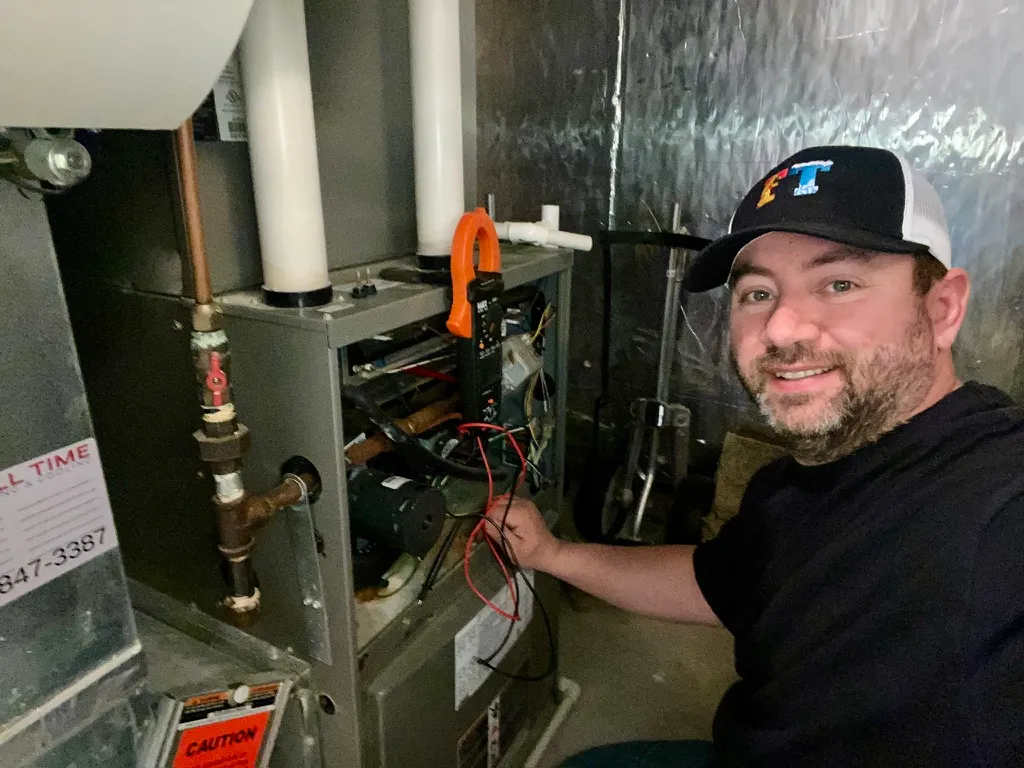
It's 11 degrees below zero, your furnace has been running for hours, and the thermostat still reads 64 when you set it to 70. There's heat coming out of the vents. The house just isn't getting there. That doesn't automatically mean your furnace is dying, and it doesn't automatically mean it's fine, either. Full Time Heating & Cooling has run furnace calls across Watertown, Waconia, Chaska, and the rest of the west metro through more than a few brutal cold snaps, and most "won't keep up" calls trace back to a handful of causes. We diagnose the actual fault before we quote anything. Call or text (952) 847-3387 if the house is losing ground fast, and Jason can talk through what's happening before deciding whether you need a visit tonight.
Why your furnace can't keep up in cold weather
A furnace that "can't keep up" is one that's producing heat but losing the race against how fast your house is shedding it. During a normal Minnesota winter day at 5 or 10 above, a properly sized unit cycles on and off with room to spare. When the outdoor temperature crashes toward that design-temperature line, your home's heat loss climbs and the furnace has to run a much longer duty cycle to hold setpoint. Below the design temperature, it may not hold it at all. That's usually the difference between "not keeping up" and "broken," though it isn't a clean line. A furnace that's actually failed typically stops producing heat altogether. But a furnace that's malfunctioning, one fighting a restricted filter into overheating and short-cycling, for example, can still push warm air out of the vents while it's shutting down early and never catching up. Warm air at the register tells you the burners are lighting. It doesn't by itself tell you the system is healthy, which is why we still check the equipment even on calls where the furnace is clearly making some heat, not just the ones where it's making none.
The honest read from years of doing this in Carver and western Hennepin counties: a two-to-three-degree gap on the single coldest night is often normal physics, not a fault. A steady slide from 70 to 60 over an afternoon, on a day that isn't record-breaking, is a problem worth chasing down regardless of how warm the vents feel.
"There's a real difference between a furnace losing two degrees on the coldest night of the decade and one losing ten degrees on an ordinary January afternoon. The first is usually just physics. The second is something we can usually fix, and you can't always tell which one you have just by standing near a vent."
Furnace running but the house is still cold: the usual causes
Several problems can cause a furnace to run for long periods without warming the house properly. Here's what we check, roughly in the order we find it:
- A dirty or restrictive air filter. A clogged filter restricts airflow across the heat exchanger. That reduces heating performance and can cause the furnace to overheat and shut the burners off before the house warms up, so you may hear the blower running even though it isn't producing heat continuously.
- Blocked supply vents or return grilles. Furniture over a floor register, a rug covering a vent, or a couch blocking a return can restrict the air path the same way a dirty filter does. Closing off multiple rooms can create the same problem.
- Duct leakage or an airflow restriction. Leaking, damaged, or undersized ducts affect how much heated air reaches different rooms. A crushed duct or another restriction may leave one part of the house cold while the rest feels comfortable. If some rooms run much colder than others, the issue is often air delivery, not the furnace's heating capacity.
- A furnace component that isn't working properly. A weak blower motor, an ignition fault, a flame sensor cutting cycles short, or another component failure can interrupt heating mid-cycle. Sometimes the furnace starts normally and shuts down before it finishes the job. Finding the cause takes testing with a meter, not a guess from the thermostat.
- A change in the home's heating needs. An addition, changes to the duct system, or an aging, undersized original unit can all affect how well the furnace covers the load. An older furnace isn't automatically an undersized furnace, and age alone doesn't mean it needs replacing. If it used to heat the house fine and now struggles, we look at what changed.
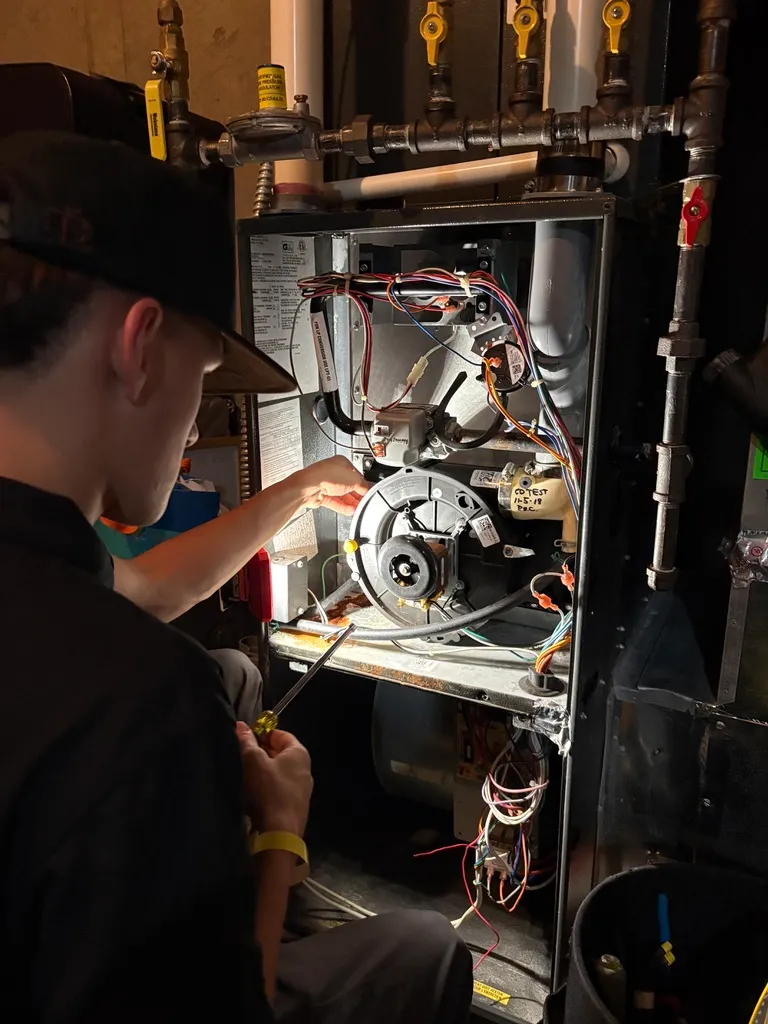
Why can't my furnace reach the set temperature?
Before scheduling furnace repair, there are a few basic checks you can safely make yourself. Leave gas components, wiring, and internal repairs to a technician.
- Check the filter. If it's dirty or overdue for replacement, install the correct replacement for your system. Some filter materials are dense even when new, so holding one up to the light isn't a reliable test for every filter, but it's a reasonable first check.
- Check supply vents and returns. Open every supply register and move furniture, rugs, and other obstructions off of them. Keep return grilles clear too.
- Check the thermostat. Confirm it's set to Heat, the schedule isn't lowering the temperature unexpectedly, and the batteries are fresh if yours uses them.
- Notice what the furnace is actually doing. Is air coming from the vents, and does it stay warm, or does it turn cool while the blower keeps running? If an error code is visible through the viewing window, note it for the technician, but don't remove panels to inspect flames or internal parts yourself.
- Look for obvious heat loss. Check for an open window or a door that isn't fully closed, and keep the door to an unheated garage shut.
- Check accessible outdoor furnace vents. From a safe position at ground level, look for obvious snow or blockage around the intake and exhaust openings. Don't take pipes apart or chip at ice yourself; call us if they look obstructed or you're unsure.
If you've done all of that and the house still won't climb, the furnace is likely fighting a component, a duct problem, or a sizing issue you can't see from the thermostat. That's where furnace repair in the west metro comes in. Call or text (952) 847-3387 with what the temperature and airflow are doing, and Jason can help figure out whether it's a same-day visit or something you can ride out.
When you may not need an emergency visit
If it's exceptionally cold outside and your house is holding near the thermostat setting, an immediate service call may not be necessary, but that's not a decision you have to make alone from the couch. Jason can talk through what the furnace is doing, whether the temperature is stable or still falling, and what your household needs, then help you check something simple or decide it's worth an on-site diagnosis. If the house is steadily getting colder, the furnace keeps shutting down, or it stops producing heat altogether, don't assume that's normal just because it's Minnesota in January. Contact us promptly.
When to repair vs replace a furnace that won't keep up
The decision starts with the furnace's condition and the actual fault, not its birth year. Age is part of the conversation, but it isn't an automatic reason to replace anything. In plain terms, here's what we weigh:
| Repair usually makes sense when | Replacement is worth pricing when |
|---|---|
| The fault can be corrected with an available part | A safe, dependable repair isn't available |
| The furnace can run safely and reliably afterward | A necessary part is discontinued or unobtainable |
| The rest of the equipment is in reasonable shape | Repeated major repairs are stacking up on one unit |
| The repair cost is a small fraction of a new system | The furnace can't meet the home's heating needs |
| The system is suited to the home's actual heating load | A major repair is costly enough to fairly compare against replacing |
We've repaired older furnaces that still had real service life left. In a January 2025 job we shared on our Facebook page, our technician replaced the blower motor on a 20-year-old Carrier furnace and completed a tune-up instead of replacing it. That doesn't mean every older furnace should be repaired, it means we check the equipment before deciding either way.
Does a failed heat exchanger mean I need a new furnace?
A failed or cracked heat exchanger is a safety issue that requires professional evaluation, and a furnace with a confirmed unsafe heat exchanger shouldn't stay in operation. But replacing the heat exchanger itself may be an option. We weigh parts availability, warranty coverage, labor, the condition of the rest of the furnace, and the total cost against a full replacement. In November 2024, we shared a time-lapse of our team replacing a heat exchanger on a Goodman furnace instead of scrapping the unit. That's why we don't treat a failed heat exchanger as an automatic whole-furnace replacement: we explain whether repairing that one component is the sensible option for your equipment before you decide.
Our repair-first approach means recommending a safe, practical repair when one exists. When replacement really is the better call, we explain why, without a commissioned tech pushing you toward it.
The best fix is the one you make before winter
A fall furnace tune-up gives us a chance to check operation and catch problems before the equipment is working its hardest. Filter and airflow issues, worn components, and early signs of failure often show up on a bench check long before they show up on your thermostat at 20 below. A tune-up can't predict every failure or guarantee a trouble-free winter, but it catches existing problems and gives you a clearer read on the furnace's real condition, on your schedule instead of the coldest night of the year.
Full Time Heating & Cooling is owner-operated out of Watertown, fully insured, MN license MB792165. We diagnose the problem, explain what we found, and give you repair pricing before any work starts. A diagnostic service fee applies to an on-site repair assessment. If your furnace is fighting the cold right now, call or text (952) 847-3387 and we'll tell you what's actually going on.
Frequently asked questions
How often should a home HVAC system be serviced?
Schedule professional maintenance once a year for the furnace and once a year for the central air conditioner, so twice a year for a full heating-and-cooling home: the furnace in the fall before the cold, the AC in the spring before the heat. Filter checks and replacement are needed between those visits, and the right interval depends on the filter, the equipment, and your household conditions.
When should I repair versus replace an old furnace?
Consider the furnace's safety, overall condition, the specific failed component, parts availability, repair history, and cost. Age alone doesn't mean it needs replacing, and a failed heat exchanger doesn't automatically require a new furnace either. Replacing just the heat exchanger may be a safe, sensible option after professional evaluation. We diagnose first and explain the options that actually apply to your equipment.
Should I call if my furnace is running but the house isn't warming up?
Yes. Call or text (952) 847-3387 to request a technician callback. Jason can gather information about the furnace's behavior, indoor and outdoor temperatures, and your household's needs to help figure out whether you need an on-site visit. If you smell gas or a carbon monoxide alarm sounds, follow the emergency instructions above rather than waiting for an HVAC callback.