
Full Time Heating and Cooling · Watertown, MN
Gas Fireplace Repair From Technicians Who Diagnose First
24/7 Emergency Service5.0 · 211 Local ReviewsMN License MB792165
NEED HVAC SERVICE?Leave your number. We'll call within one business day.
No obligation. Your information stays private.
What Causes Most Gas Fireplace Problems
Details below
Gas fireplaces have a short list of components that fail repeatedly. Knowing which one is acting up narrows the repair fast.
Dirty or Blocked Burner Ports
Faulty Gas Valve
Igniter and Wiring Issues
Pilot Assembly Problems
Remote and Wall Switch Failures
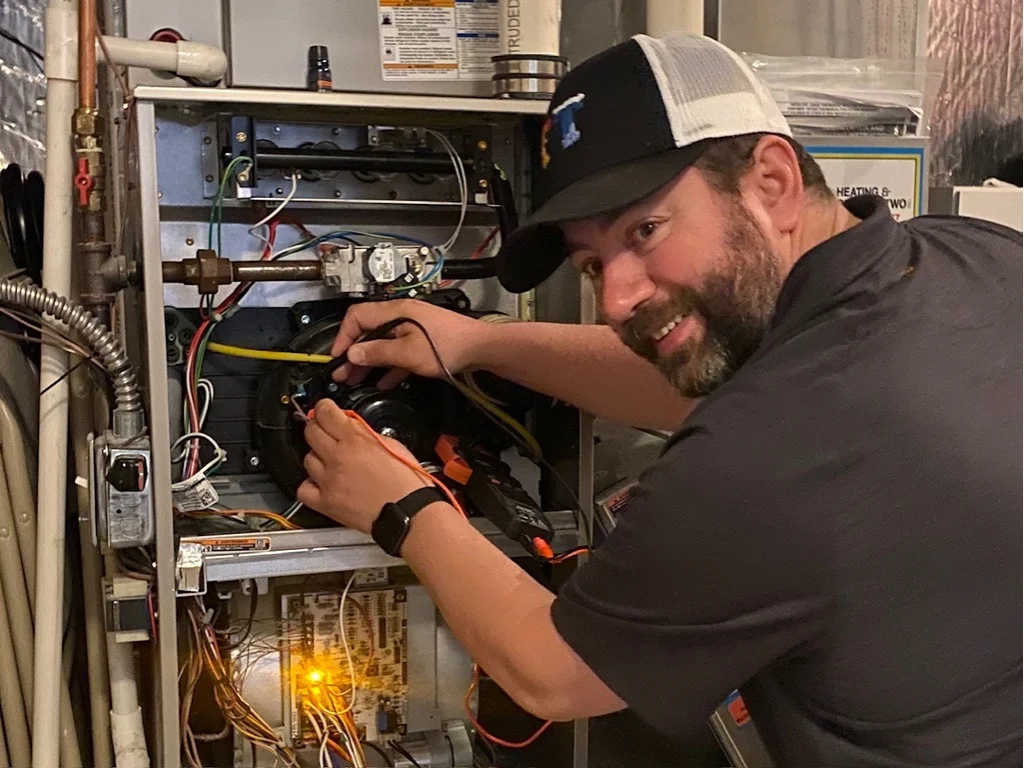
gas fireplace repair work — professional service in Watertown, MN
How We Diagnose a Gas Fireplace Repair
We don't start with assumptions. When we arrive, we run through the full system: pilot assembly, igniter, thermopile or thermocouple output, gas valve operation, wiring connections, and burner condition. That sequence matters. A weak thermopile reading and a dirty pilot orifice can produce identical symptoms, but the repairs are different. Skipping steps means fixing the wrong thing.
Once we've identified the actual cause, we explain what we found in plain language. You'll know what part failed, why it failed, and what fixing it involves. If the repair makes sense given the unit's age and condition, we do it. If the system has reached the end of its useful life, we'll say that too, and we'll point you toward gas fireplace services options that fit your situation. We won't pressure you either direction.
We're fully insured, and we handle gas appliance work throughout the Twin Cities West Metro area.
When to Call for Gas Fireplace Repair vs. Waiting
Details below
Some fireplace problems are cosmetic. Others involve gas, and those don't wait.
Call Now: You Smell Gas
Call Now: Fireplace Shuts Off Mid-Use
Call Now: Yellow or Orange Flames
Can Wait Briefly: Remote Control Stopped Working
Can Wait Briefly: Cosmetic Glass Haze
gas fireplace repair work — professional service in Watertown, MN
What the Average Lifespan of a Gas Fireplace Actually Looks Like
Most gas fireplaces last 15 to 25 years with reasonable maintenance. The insert or built-in unit itself rarely fails catastrophically. What degrades are the components: the thermopile, the gas valve, the igniter module, and the burner assembly. A 12-year-old fireplace with a bad thermocouple isn't a unit that needs replacement. It's a unit that needs a thermocouple.
That said, age matters for parts availability. Some manufacturers stop producing components for discontinued models after a certain point. If you have an older unit and we can't source the original part, we'll tell you what the retrofit options look like and what each one costs. That's the honest answer, and it's the only one we give.
If you're running a fireplace that hasn't been serviced in several years, a repair visit is also a good time to check for wear on components that haven't failed yet. Catching a weakening thermopile before it fails completely is a lot less disruptive than a no-heat call in January.
Gas Fireplace Repair Backed by Real Accountability
Details below
A few things that are specific to how we work -- and that matter when someone is working on a gas appliance in your home.
Fully Insured
No Commission-Based Technicians
24/7 Emergency Service
Plain Language Diagnosis
gas fireplace repair work — professional service in Watertown, MN
Gas Fireplace Repair Alongside Other Heating Services
Gas fireplaces are part of a home's overall heating picture, and we service more than just the fireplace itself. If your furnace, boiler, or heat pump is also showing signs of wear, we can assess those systems on the same visit. We handle furnace installation, boiler services, and heat pump services throughout the area. If indoor air quality is a concern during heating season, that's something we can address as well.
For homeowners who want to get ahead of problems rather than react to them, scheduling fireplace maintenance alongside your heating system tune-up makes practical sense. Fewer service calls, fewer surprises when the temperature drops.
Ready to Get the Fireplace Working Again?
Call or text (952) 847-3387 anytime. We're available 24/7 for emergency situations and schedule standard repair calls Monday through Friday. We'll diagnose the actual problem and give you a straight answer on what it takes to fix it.
Or send us your info
FAQ Common questions
Frequently Asked Questions
Answers below
Who do I call to work on a gas fireplace? +
A licensed HVAC technician or gas appliance specialist who has specific experience with gas fireplace systems. This isn't a job for a general handyman. Gas valve work, pilot assembly service, and thermopile replacement all involve gas lines and safety controls that require proper diagnosis and handling. Full Time Heating and Cooling is fully insured and handles gas fireplace repair throughout the Twin Cities West Metro. Call (952) 847-3387 to schedule.
What does it cost to fix a gas fireplace? +
It depends on what's actually wrong. A thermocouple replacement is on the lower end of the range. A gas valve replacement, electronic ignition module, or control board repair costs more. Parts availability on older units can also affect the total. Most gas fireplace repairs fall in the $150 to $600 range, though complex jobs on older systems can run higher. Every job is different -- contact Full Time Heating and Cooling for an accurate estimate.
What is the average lifespan of a gas fireplace? +
Most gas fireplaces last 15 to 25 years with reasonable maintenance. The cabinet and burner assembly typically outlast the components that wear out: thermopiles, gas valves, igniters, and control modules. A fireplace that's 12 to 15 years old with a failed thermocouple isn't a unit that needs replacement. It needs a thermocouple. We'll tell you honestly if repair makes sense or if parts availability for your specific model has become a real constraint.
Why does my gas fireplace light and then immediately go out? +
This is almost always a thermocouple or thermopile problem. The sensor isn't generating enough electrical output from the pilot flame to convince the gas valve to stay open, so the valve closes as a safety measure and the flame goes out. It can also result from a misaligned or dirty pilot assembly that produces a weak flame the sensor can't read correctly. Either way, it's a diagnosable, repairable problem, not a reason to replace the unit.
Is it safe to use a gas fireplace that's producing yellow or orange flames? +
No. A properly burning gas flame is predominantly blue. Yellow or orange flames indicate incomplete combustion, which typically means blocked burner ports, an incorrect air-to-gas mixture, or a venting issue. Incomplete combustion produces elevated carbon monoxide. Turn the unit off and schedule a service call before using it again. This is one of those situations where waiting isn't worth the risk.
Our promise
If we can repair it, we will.
No unnecessary replacements.You get the fix, not the invoice we would rather write.
Keep Reading
More Services
- Makeup Air HandlerNegative pressure, hard-to-open doors, or exhaust backdraft? Full Time diagnoses and installs makeup air units. Fully insured. Call (952) 847-3387.
- 24/7 Emergency Service24/7 HVAC repair across the West Metro. Call anytime. $250 after-hours fee. Press 3 for emergencies. License #MB792165.
- Rooftop UnitRTU repair, maintenance, and diagnostics for commercial rooftop package units. Fully insured. 24/7 emergency response. Call (952) 847-3387.
- Rooftop Unit ReplacementRooftop HVAC unit failing? Full Time diagnoses first, replaces only when repair doesn't make sense. Fully insured. Call (952) 847-3387.
- Thermostat UpgradesThermostat replacement and smart upgrades from a repair-first HVAC company. We diagnose first, recommend second. Call (952) 847-3387 anytime.
- Zone SystemsZone control splits your home into independently heated and cooled areas. Stop paying to condition rooms nobody uses. Call Full Time Heating and Cooling for an honest assessment.